
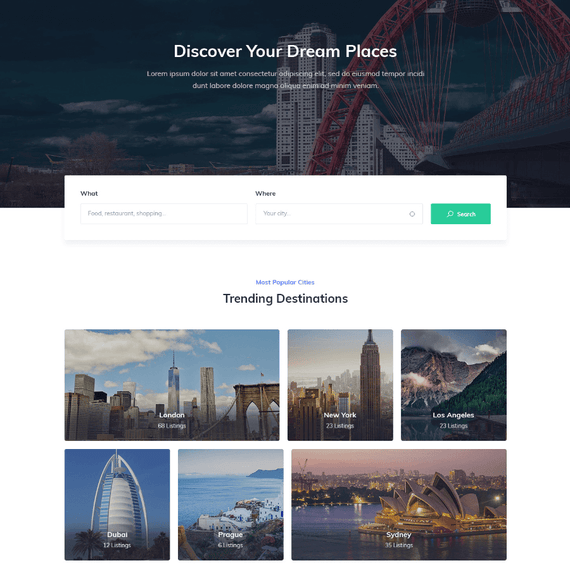
Description
dPlace WordPress Directory Theme for Travel and Tourism Websites
dPlace is a comprehensive WordPress directory theme engineered specifically for travel and tourism entrepreneurs who demand both aesthetic sophistication and functional depth. This GPL-licensed theme represents a complete solution for constructing mobile-responsive directory platforms that seamlessly integrate booking capabilities, advanced filtering systems, and sophisticated monetization infrastructure. Whether you’re launching a destination guide, accommodation directory, or comprehensive travel services marketplace, dPlace provides the architectural foundation to build scalable, visually compelling web properties that engage users and generate sustainable revenue streams.
The design philosophy underlying dPlace emphasizes visual hierarchy and user experience optimization. Each directory listing presents itself through fully customizable listing cards that reflect your brand identity while maintaining intuitive navigation patterns. The theme’s interface combines modern aesthetic principles with practical functionality, ensuring that both administrators managing the platform and end-users browsing listings experience a cohesive, professional environment. The underlying codebase prioritizes performance efficiency, delivering rapid page load times and smooth interactions across all device categories.
dPlace distinguishes itself through an unwavering commitment to scalability and configurability. Rather than imposing rigid structural constraints, the theme accommodates websites ranging from modest local directories to enterprise-level platforms hosting millions of listings. This flexibility extends through every aspect of the platform—from custom field definitions to multi-directory architecture—allowing administrators to shape the theme toward their specific operational requirements without requiring extensive custom development.
Who This Is Built For
Travel Agency Owners and Tour Operators can leverage dPlace to establish branded directory platforms showcasing their services, properties, and experiences. Rather than relying on third-party booking platforms that diminish brand presence, travel professionals use dPlace to maintain complete control over customer interactions, pricing structures, and service presentation. The integrated booking and reservation functionality accommodates complex travel itineraries, multi-property bookings, and flexible cancellation policies. Tour operators particularly benefit from the ability to display detailed service descriptions, gallery images, availability calendars, and customer reviews within a unified platform.
Destination Marketing Organizations and Tourism Boards utilize dPlace to develop comprehensive regional guides and business directories. These organizations need platforms that showcase diverse vendor categories—accommodations, restaurants, attractions, transportation services—within organized directory structures. dPlace’s multi-directory capabilities enable separate category directories maintaining distinct search parameters, custom fields, and filtering options. This organizational flexibility allows tourism boards to present cohesive regional information while giving individual businesses dedicated listing spaces that drive local discovery and economic development.
Hospitality Entrepreneurs and Accommodation Providers employ dPlace to build branded booking platforms for vacation rentals, bed-and-breakfasts, hostels, and boutique hotels. The theme’s integrated calendar systems, guest management features, and direct booking functionality eliminate dependency on commission-based third-party platforms. Hospitality operators gain direct customer relationships, control over pricing strategies, and the ability to implement loyalty programs and seasonal promotions through dPlace’s flexible configuration options.
Digital Publishers and Content Platforms focused on travel information, destination guides, and travel journalism use dPlace to monetize content through featured listings, sponsored directories, and premium business placements. Publishers can transform editorial content into revenue-generating directory platforms by enabling business owners to purchase listing packages that increase visibility and drive qualified traffic to their properties.
What dPlace Does
dPlace WordPress theme functions as a complete directory management system purpose-built for the travel and tourism industry. It moves beyond basic listing functionality to provide an integrated ecosystem supporting business operations, customer engagement, payment processing, and platform monetization. The theme handles the technical complexities of directory management—database optimization, search functionality, user authentication, and payment integration—allowing operators to focus on business strategy and user experience enhancement.
At its foundation, dPlace enables creation and management of unlimited directory listings within a scalable WordPress environment. Each listing functions as a sophisticated content container supporting images, videos, detailed descriptions, custom metadata, and dynamic filtering attributes. The theme manages listings across multiple directory categories simultaneously, maintaining distinct organizational structures that serve different business segments. Administrators define custom fields specific to their directory type—whether specific amenities for accommodations, cuisine types for restaurants, or activity categories for attractions—and these fields automatically populate search filters and listing displays.
The user-facing experience centers on advanced search functionality that helps visitors locate relevant listings through multiple discovery pathways. Rather than forcing users toward single-method searching, dPlace supports keyword searches, category browsing, map-based exploration, and sophisticated filter combinations. The search interface remains intuitive despite this depth of functionality, presenting filtering options contextually and updating results dynamically as users refine their criteria. This multi-pathway approach accommodates diverse user preferences—some visitors prefer browsing by category, while others conduct targeted searches for specific amenities or location-based criteria.
Key Capabilities and Technical Features
Mobile-Responsive Design Framework
dPlace implements responsive design principles ensuring consistent functionality and aesthetic presentation across smartphones, tablets, and desktop computers. The theme automatically adjusts layout elements, image sizing, and interface components based on viewport dimensions, delivering optimized experiences regardless of access device. Mobile users encounter touch-friendly navigation, appropriately scaled imagery, and streamlined listing cards that convey essential information without requiring excessive scrolling. This mobile optimization extends to critical functions like map interfaces, booking systems, and payment processing, ensuring seamless transactions across all platforms.
Elementor Page Builder Integration
dPlace WordPress theme integrates comprehensively with the Elementor page builder ecosystem, providing visual construction tools that eliminate code-level customization requirements. Administrators leverage Elementor’s drag-and-drop interface to modify layouts, reorganize content sections, and design custom pages matching brand specifications. The theme includes purpose-built Elementor widgets specifically designed for directory functionality—listing displays, search interfaces, map embeds, and featured listing showcases. This integration democratizes design customization, allowing non-technical administrators to implement sophisticated layouts without developer assistance. Elementor compatibility also enables rapid experimentation with design variations, facilitating iterative improvement of user experience based on performance data and user feedback.
Advanced Search and Filtering Architecture
The search functionality powering dPlace goes far beyond basic keyword matching. The system supports faceted search interfaces allowing users to combine multiple filter criteria simultaneously—location range, price points, amenities, rating minimums, and custom attributes relevant to your specific directory type. Search results update dynamically as users adjust filters, providing immediate visual feedback without page reloads. The theme implements intelligent search algorithms that understand partial matches, misspellings, and semantic variations, increasing the probability that users discover relevant listings even when search terminology differs from backend metadata. Administrators configure which fields appear as filterable dimensions, enabling directory-specific search optimization without modifying core theme functionality.
Multi-Directory and Custom Fields
dPlace’s multi-directory capability enables operation of multiple distinct directories within a single WordPress installation. This architecture proves invaluable for comprehensive platforms serving diverse business categories—one directory for accommodations, another for dining establishments, another for activity providers, each maintaining separate custom fields, listing attributes, and organizational structures. Custom field functionality allows unlimited definition of metadata relevant to your specific directory type. Tourism directories might define fields for accessibility features, parking availability, and wheelchair access. Dining directories might track cuisine types, dietary accommodations, and reservation policies. The custom fields automatically integrate into search filters, listing templates, and business owner submission forms, creating coherent directory experiences tailored to specific business categories.
Integrated Booking and Reservation System
dPlace incorporates native booking functionality allowing business owners to manage reservations directly within the directory platform. Rather than requiring customers to contact businesses separately, the booking system enables real-time availability checking, reservation scheduling, and automated confirmation communications. The calendar interface displays booked and available dates, accommodates blocked periods and maintenance windows, and supports variable pricing based on seasonality or demand. Booking data integrates with user dashboards, creating unified management interfaces where business owners view reservations, guest communications, and occupancy patterns within their dPlace account.
Monetization and Pricing Package Systems
dPlace provides comprehensive monetization infrastructure supporting multiple revenue models. The theme enables creation of tiered listing packages offering different feature levels—basic listings appear in directories with limited visibility, while premium packages unlock featured placement, expanded image galleries, priority search positioning, and exclusive promotional tools. Business owners purchase packages through integrated payment processing, converting directory access into sustainable revenue streams. Administrators configure package features, pricing structures, renewal terms, and upgrade pathways, creating flexible monetization models matching their business strategy. The system automatically manages package expiration, renewal reminders, and upgrade prompts, minimizing administrative overhead while maximizing revenue realization.
Payment Gateway Integration
dPlace seamlessly integrates with major payment processing platforms including PayPal and Stripe, enabling secure transaction processing for package purchases, booking deposits, and service payments. Multiple gateway support accommodates diverse customer payment preferences—some users prefer PayPal’s familiar interface, others prefer credit card processing through Stripe. The payment infrastructure handles transaction security, PCI compliance, currency conversion, and automatic settlement processes, eliminating manual payment management. Administrators configure payment settings, define transaction fees, and manage refund policies through intuitive WordPress dashboard interfaces.
User Dashboard and Account Management
Business owners and individual users access personal dashboards providing centralized management interfaces for their directory presence. Listing owners view active listings, manage photographs and descriptions, update availability calendars, and access performance analytics. The dashboard displays booking requests, guest communications, and revenue summaries, providing comprehensive visibility into business operations. Users manage their account settings, subscription status, and billing information through straightforward interfaces requiring no technical knowledge. This user-centric design reduces support burden while increasing user satisfaction and platform stickiness.
SEO Optimization and Search Visibility
dPlace incorporates built-in SEO functionality ensuring directory content ranks effectively in search engine results. The theme generates semantic HTML structure, implements proper heading hierarchies, and supports comprehensive metadata optimization. Individual listings benefit from automatic schema markup implementation, enabling search engines to understand business categories, ratings, addresses, and booking availability. Administrators control metadata for archive pages, category listings, and search result displays. The theme supports XML sitemaps, breadcrumb navigation, and URL structure optimization, all critical factors in search engine ranking algorithms. These integrated SEO features eliminate dependency on third-party optimization plugins while ensuring directory content receives appropriate search engine visibility.
Social Login and Third-Party Authentication
dPlace streamlines user registration through social login integration, allowing visitors to create accounts using existing social media credentials. Users authenticate via Facebook, Google, or other platforms, reducing friction in the account creation process. Social login integration increases registration completion rates while reducing password management burden. For business owners, simplified authentication accelerates listing creation and directory participation, expanding the active business directory base.
Map Integration and Location-Based Discovery
Interactive maps enable location-based directory exploration, allowing users to discover listings geographically and visualize service areas or property locations. Map interfaces support filtering by category, price range, and custom attributes, enabling sophisticated location-based searches. Business owners specify precise locations, define service radii, and highlight location-specific features through map integration. These visual discovery tools prove particularly valuable in travel contexts where geographic context significantly influences decision-making.
Compatibility and Technical Requirements
dPlace operates as a pure WordPress theme, requiring a WordPress 5.0 or later installation as its foundation. The theme is compatible with PHP 7 and later versions, supporting modern server environments while maintaining backward compatibility. The Directorist plugin serves as the core dependency enabling dPlace’s directory functionality—this plugin relationship provides the database architecture, listing management systems, and core directory features that dPlace extends through its specialized design and user interface enhancements.
For optimal performance and feature access, administrators should ensure their WordPress hosting environment supports the required PHP version and includes adequate database resources for scaling to substantial listing volumes. The theme’s lightweight codebase minimizes server resource consumption while delivering responsive performance even under high traffic loads. Page load times remain consistently fast through efficient code structure, optimized image handling, and strategic caching implementation.
Elementor page builder compatibility enables visual customization without code modification, though administrators comfortable with WordPress theme development can extend functionality through child theme development or custom plugin creation. The theme’s modular architecture supports straightforward customization while maintaining upgrade compatibility.
Frequently Asked Questions
Can I create multiple independent directories within a single dPlace installation?
Yes, dPlace’s multi-directory architecture enables simultaneous operation of multiple distinct directories. Each directory maintains separate custom fields, listing categories, and organizational structures, allowing accommodation directories, restaurant directories, and activity directories to coexist within unified WordPress installations. This multi-directory capability eliminates the need for separate website installations while maintaining clear organizational boundaries.
What payment methods does dPlace support for listing packages and bookings?
dPlace integrates with PayPal and Stripe payment gateways, accommodating the vast majority of customer payment preferences. These integrations handle secure transaction processing, currency conversion where applicable, and automated settlement. Administrators configure payment settings and define transaction fees through dashboard interfaces without requiring technical configuration.
How does dPlace handle search engine optimization for directory listings?
dPlace incorporates comprehensive SEO functionality including semantic HTML structure, automatic schema markup implementation, XML sitemap generation, and metadata optimization tools. Individual listings receive proper heading hierarchies and structured data markup enabling search engines to understand business information, ratings, and availability. The theme’s built-in SEO features eliminate dependency on additional optimization plugins while ensuring directory content achieves appropriate search visibility.
Can users create accounts using social media credentials?
Yes, dPlace supports social login integration allowing account creation through Facebook, Google, and other social platforms. Social authentication streamlines registration processes, reducing friction in account creation while accommodating modern user expectations for simplified authentication workflows.
Getting Results with dPlace
Successful directory platforms built with dPlace WordPress theme share common characteristics: they prioritize user experience through intuitive search interfaces, maintain comprehensive and accurate listing information, and implement monetization strategies aligned with their audience expectations. The most effective implementations leverage dPlace’s customization capabilities to reflect their specific business category—tourism boards configure fields and filters relevant to destination marketing, accommodation platforms emphasize calendar functionality and booking integration, while dining directories highlight cuisine types and dietary information.
Platform growth accelerates when administrators actively recruit quality listings, maintain consistent content updates, and implement promotional strategies highlighting the platform’s unique value proposition. dPlace’s user-friendly listing submission processes and business owner dashboards encourage participation while minimizing support requirements. As directories mature, the combination of search engine visibility, user discovery tools, and monetization infrastructure creates sustainable revenue foundations supporting ongoing development and competitive differentiation.